
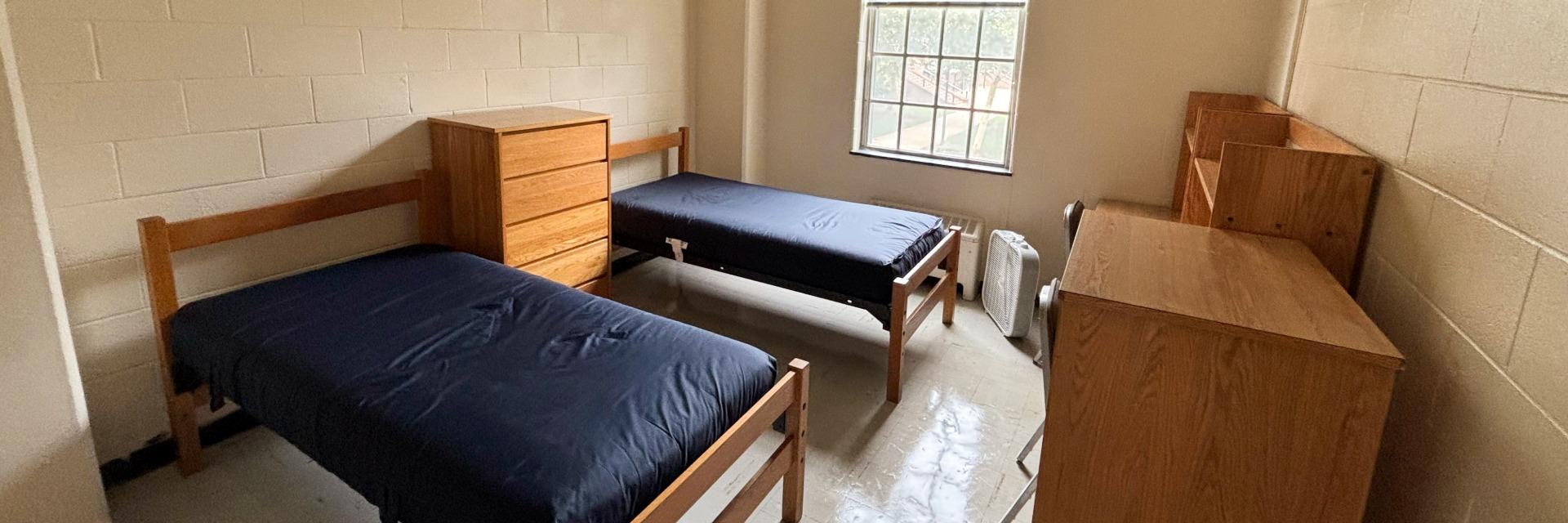
Emergency Housing for Undergraduate Students
If you’re an undergraduate student experiencing homelessness (and enrolled at least part-time and age 24 and under), you may be eligible for emergency housing. Housing is provided based on availability and for a length of time determined by our case management team.
While this housing is not free or subsidized, you won’t have to navigate the process alone. Our team can connect you with the Office of Student Financial Aid to explore funding options or appeal your current aid package.
How to Request Support
Submit the form below to schedule a consultation and be assessed for this resource.
Frequently Asked Questions
What is UMD's definition of homelessness?
UMD uses the McKinney-Vento definition of homelessness:
- Sharing the housing of other persons due to loss of housing, economic hardship, or a similar reason (also referred to “doubled up” or “couch surfing”);
- Students who live in substandard housing such as motels, hotels, trailer parks or camping grounds due to a lack of alternative adequate accommodations;
- Students living in emergency or transitional shelters;
- Students abandoned in hospitals;
- Students with no stable foster care placement;
- Students (possibly with families) who are fleeing or attempting to flee domestic violence, dating violence, sexual assault, stalking, or other dangerous or life-threatening conditions that relate to violence against the individual or a family member.
Am I experiencing homelessness or housing insecurity?
You may benefit from meeting with a Thrive Center staff member if:
- You do not have a safe, stable, and adequate place to sleep.
- You are couch surfing/staying temporarily with friends, relatives, or others because you have nowhere else to go.
- You are sleeping in your car, a hotel, shelter, or other temporary location.
- You have been asked to leave your current housing and do not know where you will stay next.
- You cannot return to your family home because of safety concerns, family conflict, estrangement, or other circumstances.
- You are at immediate risk of losing your housing.
What situations do not meet the definition of homelessness?
The following situations, by themselves, generally do not indicate homelessness or housing insecurity:
- Being on a residence hall waitlist while you have a safe and stable place to live (i.e., your family home).
- Not receiving your preferred residence hall assignment.
- Choosing to commute from a family home.
- Wanting to live closer to campus for convenience.
- Temporary uncertainty about future housing when you currently have a stable place to stay.
What if I'm not sure whether my situation qualifies?
If you are unsure whether your circumstances meet the definition of homelessness or housing insecurity, we encourage you to review the information above before contacting our office. Students who lack a safe, stable, and adequate place to live, or who are at risk of losing housing, are encouraged to complete our assistance form and speak with a staff member.
Housing Resources
Get help navigating housing concerns by connecting with the following resources.
Undergraduate students who currently live on campus and are part of the Fostering Terp Success program are provided with campus housing during all university breaks, including Thanksgiving, Winter, Spring and Summer breaks.
The Department of Resident Life oversees a variety of university-owned housing options for undergraduate students.
Off-Campus Housing Services is an excellent resource for undergraduate and graduate students looking for housing in College Park and beyond. It provides personalized information about housing and off-campus living, a searchable database listing available rental properties in the area and an online database where students can search for roommates with similar housing needs and interests.
Tenant Resources for Students Living Off-Campus
Students living off-campus may encounter challenges related to leases, landlords, housing conditions, utilities, or other tenant concerns. While the university does not provide short-term emergency housing for students experiencing off-campus housing challenges, there are resources available to help you understand your rights, address housing concerns, and identify possible options.
Know Your Rights
If you are facing eviction, a utility shutoff, unsafe living conditions, or another urgent housing issue, seek assistance as early as possible. Your rights and available options may depend on your lease, where you live, and the specific circumstances. The Prince George’s County Landlord/Tenant Code is a helpful resource.
Legal Assistance and Tenant Rights
If you have questions about your lease, tenant rights, eviction, disputes with a landlord, housing conditions, or other legal concerns, the following resources may be able to assist:
- Student Legal Aid: Legal information, advice, and notary services for eligible undergraduate students and graduate students.
- Community Legal Services of Prince George’s County: Legal assistance for eligible Prince George’s County residents, including support with landlord-tenant matters.
Utility Assistance
If you are having difficulty paying your utility bills, assistance may be available through the Maryland Department of Human Services Office of Home Energy Programs (OHEP). You can also contact your utility provider directly to ask about payment plans, financial assistance programs, or other options that may be available.